




Your warehouse never stops moving. Forklifts, inventory scans, shift handoffs, shipping systems — all of it running on a network that was probably not designed for any of it.
And when that network goes down, everything else does too.
Warehouse WiFi failures are one of the most underestimated operational problems in manufacturing and industrial logistics. They get written off as minor nuisances — a scanner that won’t connect, a tablet that keeps dropping signal. But the cumulative cost of those interruptions adds up fast. Missed shipments, idle staff, and frustrated tenants don’t stay quiet for long.
So why does it keep happening? More often than not, it comes down to a few fixable problems that nobody tackled when the building was first wired up.
The Building Was Not Designed With WiFi in Mind

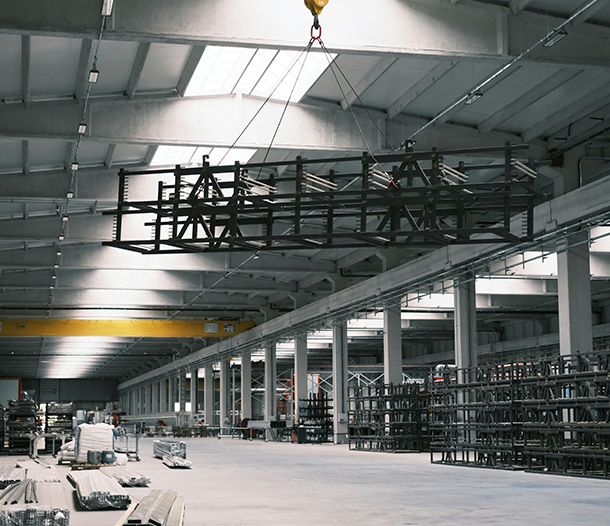
Most warehouses and manufacturing facilities were built long before wireless connectivity was a business-critical requirement. The infrastructure — concrete walls, metal shelving, steel I-beams, corrugated roofing — is essentially a radio frequency obstacle course.
WiFi signals don’t pass through steel and concrete the way they move through drywall. They bounce, scatter, and degrade. A single access point that would cover an entire open-plan office might struggle to reach 30 feet inside a dense racking system.
If your network was designed without accounting for the physical environment, dead zones are not a bug. They are the expected result. Reliable warehouse WiFi solutions start with understanding the space — not just plugging in hardware and hoping for the best.
Access Points Are Placed Wrong
Even when a facility has multiple access points, poor placement is one of the most common causes of connectivity problems. Access points mounted in corners, clustered near the office, or installed by whoever was cheapest at the time rarely provide the coverage pattern an active warehouse actually needs.
Coverage is not just about distance. It is about signal strength in the places where work happens — loading docks, pick-and-pack stations, charging areas, mezzanine levels. A site survey that maps actual signal behavior throughout the space is the starting point for any reliable industrial network support engagement.
Without it, you are guessing.
The Network Cannot Handle the Device Load
Warehouse and manufacturing environments have changed dramatically in the last decade. A facility that once ran on a handful of desktop terminals now supports barcode scanners, tablets, mobile printers, smart forklifts, security cameras, HVAC sensors, and personal devices for every worker on the floor.
Most legacy networks were not built for that volume. When too many devices compete for bandwidth on an aging system, performance degrades across the board. Connections drop. Latency spikes. Workers restart devices and lose time.
Upgrading to WiFi 6 (802.11ax) infrastructure significantly improves how a network handles high device density. It is not just faster — it is more efficient in environments with many simultaneous connections. For IT support in manufacturing companies, getting this hardware layer right is foundational to everything else.
Interference Nobody Noticed
Warehouses are high-interference environments. Forklifts with wireless controls, cordless headsets, Bluetooth scanners, and neighboring facilities on overlapping channels all compete for the same radio frequency spectrum.
This kind of interference is invisible to the people working in the space, but it creates real throughput problems that look like a WiFi issue when the root cause is actually channel congestion. A proper wireless assessment identifies these sources and configures the network to minimize their impact.
Security and Connectivity Are Not Separate Problems
One more thing worth naming: a warehouse network that was set up quickly is often a warehouse network that was set up insecurely. Shared passwords, flat network architecture, no segmentation between operational technology and corporate systems — these are common in facilities where connectivity was treated as an afterthought.
That matters because manufacturing cybersecurity is not an abstract concern. Manufacturing ransomware attacks have surged in recent years, with industrial facilities ranking among the most targeted sectors. Shipping data, inventory systems, production controls, and access credentials all represent value to bad actors. A network that keeps dropping connections is a problem. A network that keeps dropping connections and has no real security posture is a liability.
Managed IT services for manufacturing need to address both layers — connectivity and security — because they share the same infrastructure.
Multi-Site Operations Add Another Layer of Complexity
For companies managing more than one facility, the challenges compound. Each site may have different hardware, different configurations, and different levels of reliability. Without centralized oversight, problems at one location stay invisible until they escalate.
Multi-site IT support means consistent standards, monitoring, and response across every location — not a patchwork of local fixes. For manufacturing operators in the Dallas-Fort Worth area, this is increasingly where the conversation around managed IT solutions starts.
What a Reliable Warehouse Network Actually Looks Like
Getting this right is not complicated, but it does require the right approach from the start:
- A physical site survey to map signal behavior and identify dead zones before any equipment is installed
- Access point placement based on where work actually happens, not where cables were easiest to run
- Modern hardware capable of handling high device density without degradation
- Network segmentation to isolate operational systems from everything else
- Manufacturing ransomware protection built into the security architecture, not bolted on later
- Ongoing monitoring so problems are identified before they interrupt operations
Warehouse WiFi does not have to be a recurring headache. When the network is designed for the environment — not retrofitted into it — the drops, dead zones, and downtime stop being a weekly conversation.
LG Networks is a manufacturing MSP serving Dallas-Fort Worth industrial and commercial facilities. We provide managed IT services for manufacturing companies — from warehouse WiFi and industrial network support to cybersecurity and multi-site IT management. If connectivity or security is becoming a problem at your facility, reach out for a complimentary assessment.
