
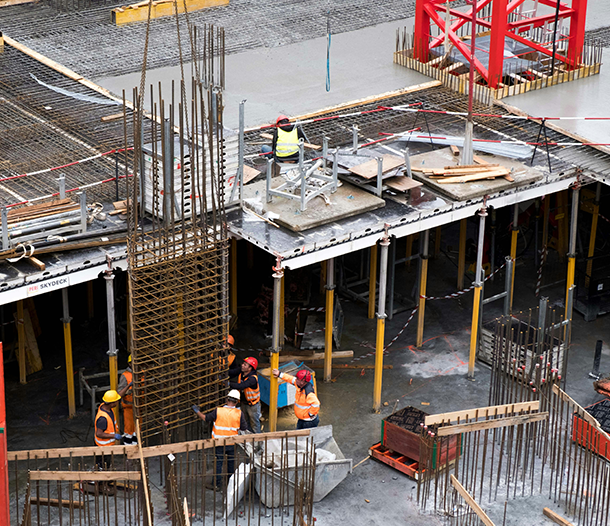






Construction companies are excellent at managing visible risks — jobsite safety, tight timelines, subcontractor coordination, material costs. These are tracked, inspected, and actively managed every day.
But one risk consistently goes unmanaged until it causes real disruption: who has access to your systems, and what they can do with it.
Unlike a physical jobsite hazard, weak access control does not show warning signs before it creates problems. And in construction environments with rotating subcontractors, shared devices, multiple job sites, and constant file sharing, the exposure compounds quickly.
What Access Control Actually Means
Access control is straightforward: who can log into your systems, and what can they do once they’re in.
In construction, it often looks like this in practice:
- Shared logins between crew members
- Subcontractors who still have system access months after a project ends
- No multi-factor authentication on email, Procore, or accounting platforms
- No clear picture of who has access to what across your organization
The result is an IT environment that nobody fully owns or monitors. That is where operational risk quietly builds.
Where Construction Companies Get Burned
Subcontractor access that never gets removed
Subcontractors need access to project platforms, documents, and sometimes financial tools. That is not the problem. The problem is what happens after the project ends.
It is common for an account provisioned for a two-week engagement to still be active months later, often with more permissions than were ever needed. Over time, those accounts accumulate access across multiple systems.
If one of those accounts is compromised, whoever has it inherits everything tied to it: project files, contracts, payment details, client communications. For operations leaders and controllers, this is where financial risk starts to surface.
Default passwords that never get changed
Many construction systems — from accounting software to jobsite routers — are deployed with default usernames and passwords. And they never get changed.
This is not a sophisticated attack vector. It is the digital equivalent of checking whether the front door is unlocked. Attackers scan for it actively, and they find it often.
Shared logins as standard practice
This happens on nearly every jobsite. Someone needs quick access, so a login gets shared. It saves time in the moment.
But when multiple people use the same account, you lose the ability to track who did what, remove access for one person without affecting others, or investigate issues when something goes wrong. Shared logins eliminate accountability entirely, which makes troubleshooting slower and incident response harder.
No multi-factor authentication
MFA is the single most effective step most construction companies have not taken. Without it, a stolen or guessed password is all it takes to access your email, project management platform, or remote systems.
With it, a compromised password alone is not enough.
Many construction companies still do not have MFA enabled across email, Procore, Microsoft 365, or remote access tools. It is one of the most straightforward controls available and one of the most consistently skipped.
The Operational Impact
When access is not managed, the consequences are not just a cybersecurity problem. They show up in operations.
A compromised account can expose blueprints, bid data, subcontractor payment information, employee records, and financial systems. For project managers, that translates directly to project delays, crews waiting, work stopping, and deadlines slipping.
For owners and executives, it can mean lost revenue, wire fraud exposure, and legal liability.
The systems your teams use to access drawings, submit RFIs, approve change orders, and communicate across job sites and offices are all connected. When one account is compromised, the exposure rarely stops there.
How LG Networks Addresses This
Most construction companies do not lack technology. They lack centralized IT management that keeps access controls consistent as their business grows and changes.
LG Networks helps construction firms across the DFW area close these gaps through managed IT services, cybersecurity support, and ongoing oversight across offices and job sites. That includes:
- MFA enforcement across Microsoft 365, Procore, email, and remote access tools
- Access management so permissions are tied to roles, not convenience
- Subcontractor access oversight with documented offboarding procedures
- 24/7 monitoring for unusual logins, suspicious account activity, and compromised credentials
- Endpoint protection and patch management for field laptops, tablets, and remote devices
- Help desk support for field and office teams when access issues arise
- Backup and disaster recovery if an incident does occur
The goal is not a one-time fix. Access control requires ongoing maintenance as people join, leave, and change roles. An unmanaged environment drifts back toward exposure over time.
A Practical Starting Point
If you are not sure where your environment stands, start with four questions:
- Do you know every account that currently has access to your project platforms and financial systems?
- Are former employees and past subcontractors fully offboarded from all systems?
- Is MFA enabled across email, Microsoft 365, and remote access?
- Are any systems or devices still running default credentials?
If any of those answers are unclear, that is where to start.
Construction companies invest heavily in equipment, labor, and project execution. The systems that support that work deserve the same level of management. Weak access control is one of the most preventable operational risks in the industry, and it is also one of the most common.
Ready to make a change? Connect with us to learn how we help construction firms across Dallas and DFW standardize access controls, reduce security gaps, and keep operations running without disruption.
